Y Strainers
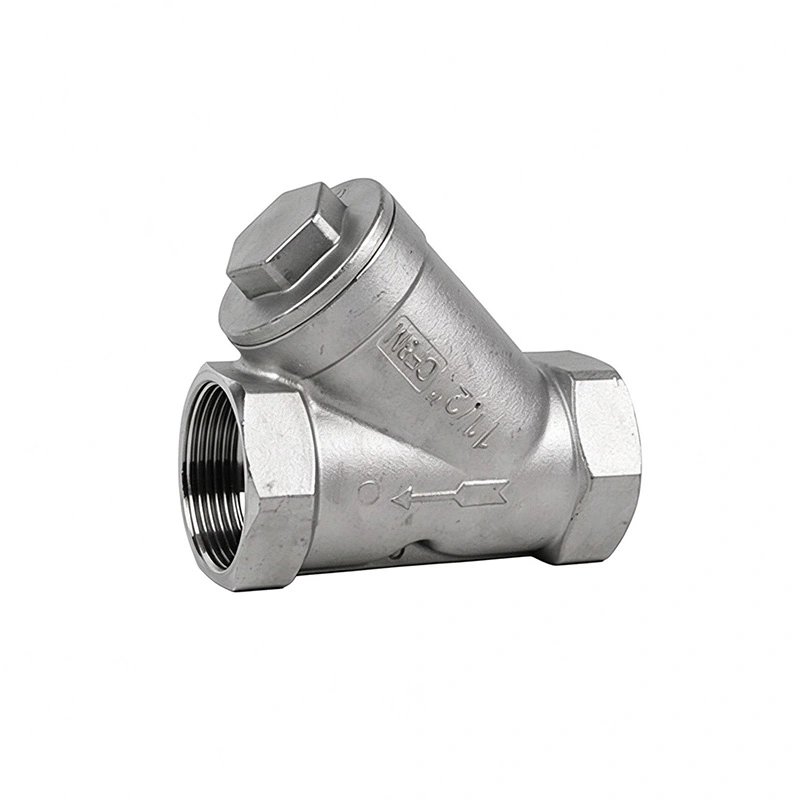
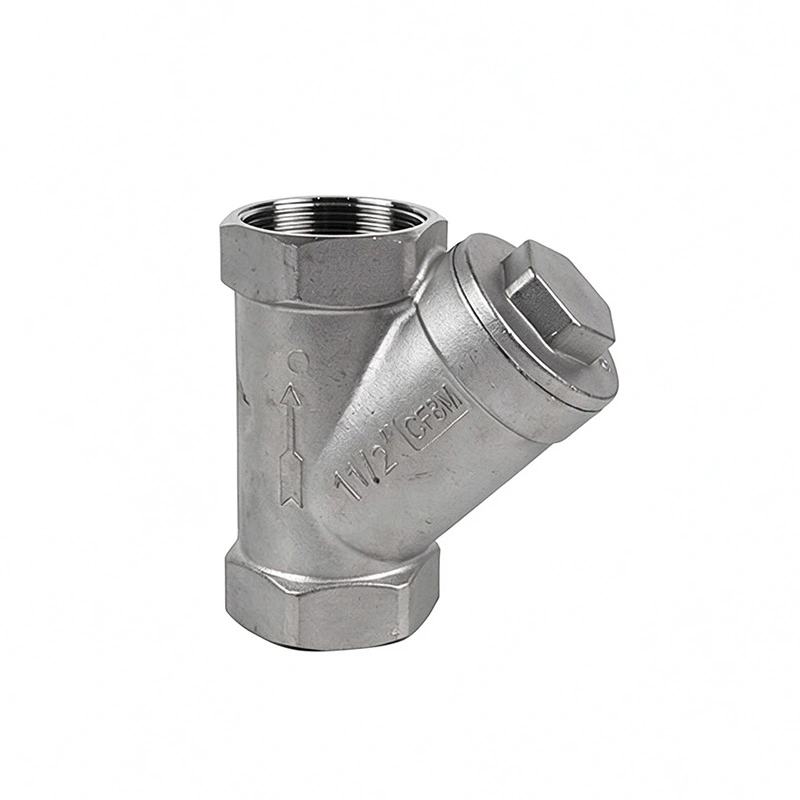
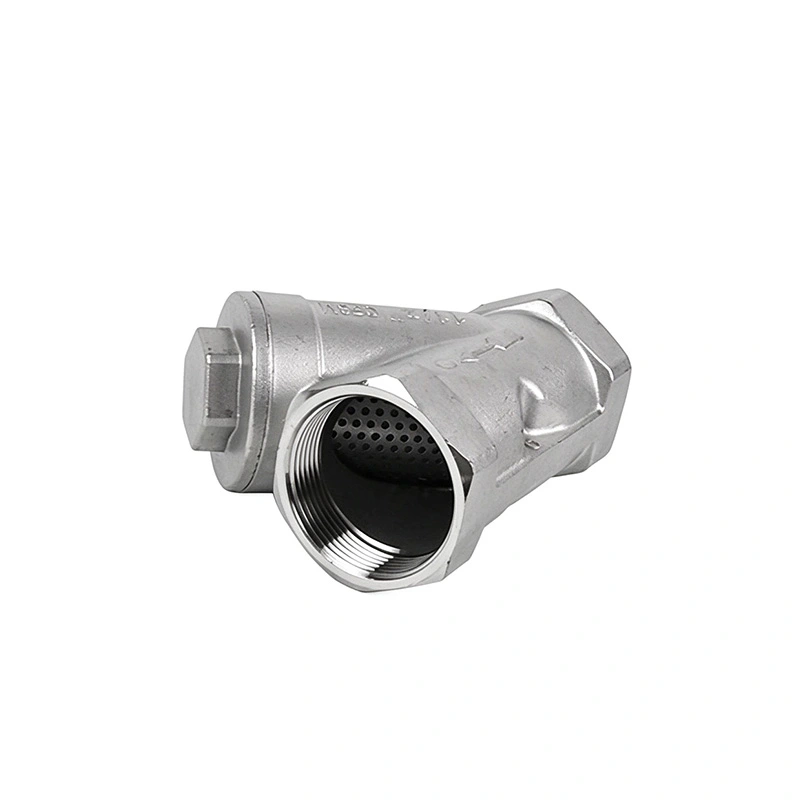
Stainless Steel Y-Strainer
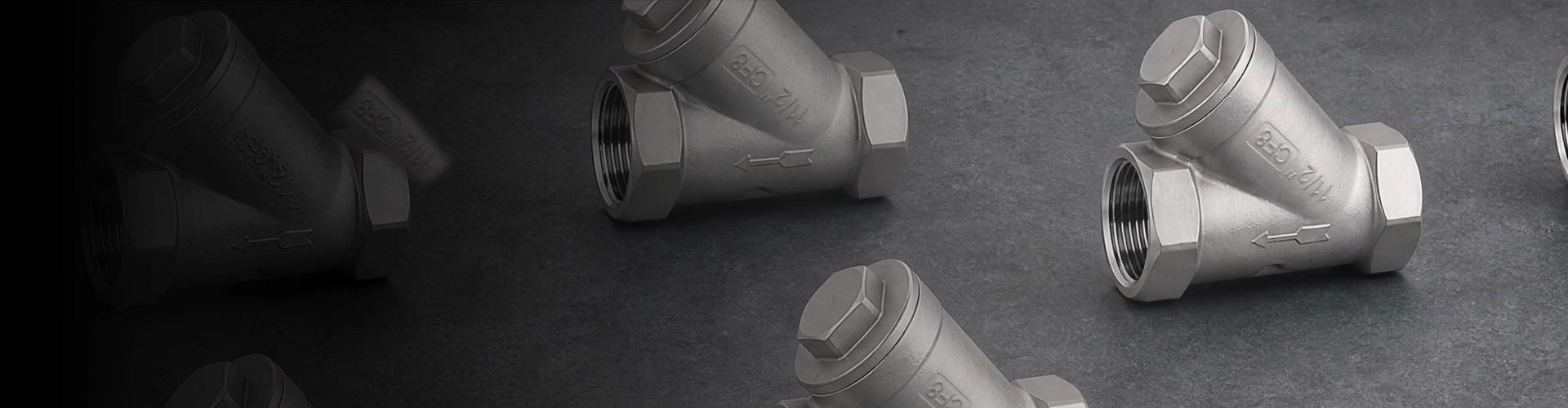
Stainless Steel Y-Strainer with Threaded End Connections
This Stainless Steel Y-Strainer is a compact pipeline filtration device with threaded end connections. Its internal screen retains suspended solids, scale and other debris before they reach downstream equipment such as pumps, meters and control valves. The Y-shaped body provides a practical flow path with relatively low pressure loss, while the removable screen allows the collected material to be cleaned without removing the complete strainer body from the pipeline. It is suitable for water treatment, petrochemical, HVAC and general industrial piping systems.
Main Dimensions
| Size | 1/2" – 4" |
| Pressure Class | CL150 |
| Thread Standard | NPT / BSP |
| Max Pressure | 285 PSI |
| Design and Manufacturing Standards | ASME B16.34 |
| Testing and Inspection | API 598 |
| Pressure-Temperature Ratings | ASME B16.34 |
| Temperature Range | -25°C ~ 150°C |
| Body Material | ASTM A351 CF8M (316) |
| Mesh Material | ASTM A182 F316 |
| Cap Material | ASTM A182 F316 |
| Seat Material | PTFE |
| Options | Other materials are available upon request. |
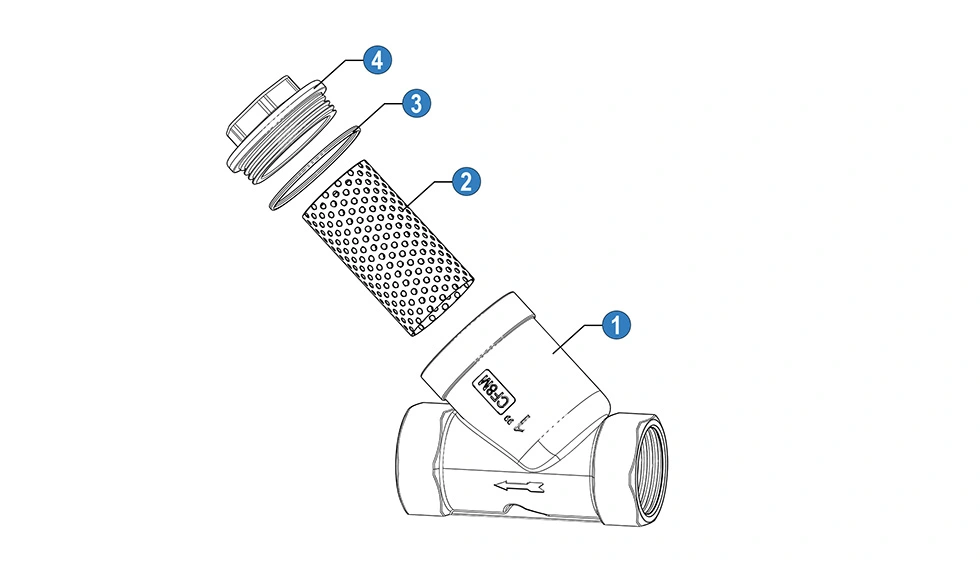
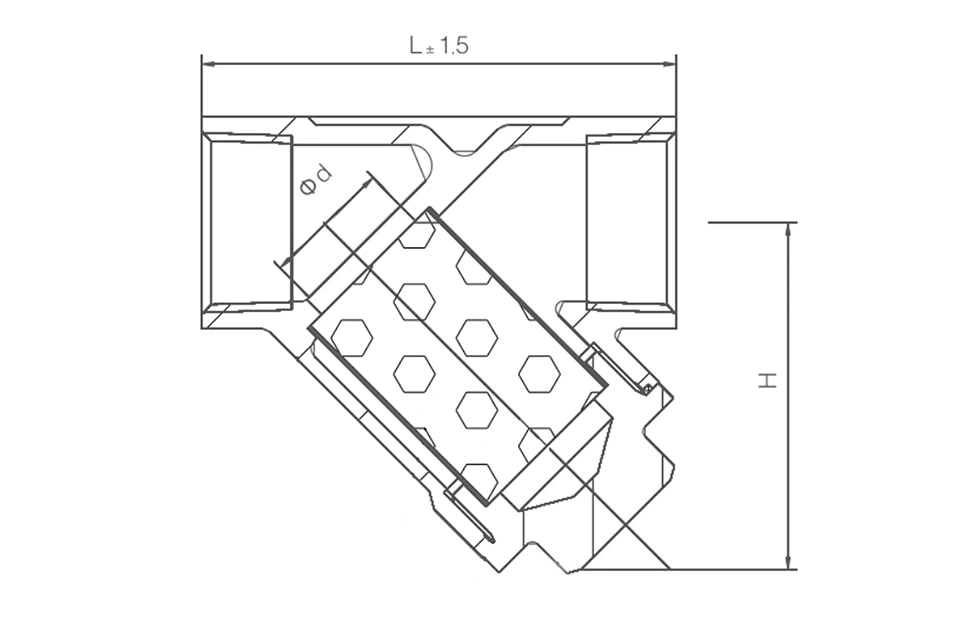
| SIZE | 1/4" | 3/8" | 1/2" | 3/4" | 1" | 1-1/4" | 1-1/2" | 2" |
| d | 10 | 12 | 14 | 19 | 24 | 31 | 38 | 49 |
| L | 61 | 61 | 61 | 73 | 86 | 99 | 108 | 138 |
| H | 43 | 43 | 42 | 49 | 60 | 66 | 73 | 92 |
Working Principle
When fluid enters the strainer from the inlet, it flows through the perforated screen. Solid particles and impurities are intercepted on the outer side of the screen, while clean fluid passes through the mesh and exits from the outlet. For maintenance, simply unscrew the end cap and take out the screen for cleaning. After reassembly, the strainer returns to normal filtration, ensuring long-term stable operation of the pipeline system.
Quality Inspection
Chemical composition inspection to ensure stainless steel materials fully comply with standard specifications.
Strict inspection of thread size, connection dimension and overall structure for universal and precise installation.
Shell pressure and sealing test under rated working pressure to eliminate potential leakage risks.
Appearance, cleaning and assembly quality check before packaging to ensure defect-free delivery.
Packaging & After-Sales Service
All Y-strainers adopt standardized export double-layer packaging for safe long-distance international transportation. Each unit is individually packed in a thickened corrugated carton for shock absorption and scratch protection. The outer shipping package uses sturdy plywood cases with excellent compression, drop and moisture resistance, fully adapting to sea and land freight.
- Official material test reports and relevant qualification documents are provided for each batch.
- Professional technical support for product selection, installation and maintenance.
- Quality warranty for factory-supplied products with fast response to product-related issues.
- Customized filtration solutions and material configurations available.
FAQ
A Stainless Steel Y-Strainer is used to remove suspended solids, rust, scale and other unwanted particles from a fluid line before they reach downstream equipment. It is commonly installed upstream of pumps, control valves, meters, heat exchangers and other components that may be affected by solid contaminants.
Fluid enters through the inlet and passes through a removable screen installed inside the strainer body. Solid particles are retained by the screen, while the filtered fluid continues through the outlet. The screen can be removed and cleaned when the accumulated debris begins to restrict flow.
The screen should be inspected and cleaned when the pressure difference across the strainer increases, the downstream flow decreases, or routine inspection shows a significant amount of collected debris. The cleaning interval depends on the cleanliness of the medium and the operating conditions.
Selection should consider the pipeline size, flow rate, operating pressure, temperature, fluid type and required filtration level. The strainer should provide the required flow capacity without creating excessive pressure loss under normal operating conditions.
Filtration accuracy is determined by the screen opening or mesh specification. A finer screen can retain smaller particles but may also create a higher pressure drop and require more frequent cleaning. The appropriate screen should therefore be selected according to the particle size that needs to be removed and the required flow rate.
Y-strainers can be used with compatible water, oil, gas and other industrial fluids. The body material, screen material, sealing components, pressure rating and temperature rating should be checked against the actual service conditions before selection.
Yes. The flow direction should follow the arrow or flow marking on the strainer body. The installation position should also allow the screen chamber to be accessed for inspection and cleaning. The manufacturer's installation instructions should be followed for the specific configuration.
A Y-strainer is generally used for mechanical removal of solid particles from a pipeline and is often installed as a protective device upstream of other equipment. A filter may use a finer or more specialized filtration medium when a specific particle removal level is required. The appropriate choice depends on the fluid, particle size, flow rate and filtration requirements.
Pressure loss can be affected by strainer size, screen opening, flow rate, fluid viscosity and the amount of debris accumulated on the screen. Selecting an appropriate size and cleaning the screen before excessive fouling occurs can help maintain the required flow conditions.
Key information includes nominal pipe size, connection type, fluid medium, operating pressure, operating temperature, flow rate, required filtration accuracy, body material and screen specification. For special applications, additional requirements such as corrosion resistance, installation orientation or inspection documentation should also be confirmed.
Request a Stainless Steel Y-Strainer Quote
Send your pipeline size, connection type, fluid medium, operating pressure, temperature and required filtration accuracy. Our team can review the technical requirements and confirm the suitable strainer configuration and documentation.
-
Address
JINHAI 3RD ROAD, YONGXING SUB-DISTRICT, LONGWAN DISTRICT, WENZHOU CITY, ZHEJIANG PROVINCE, CHINA
-
Tel
-
Email