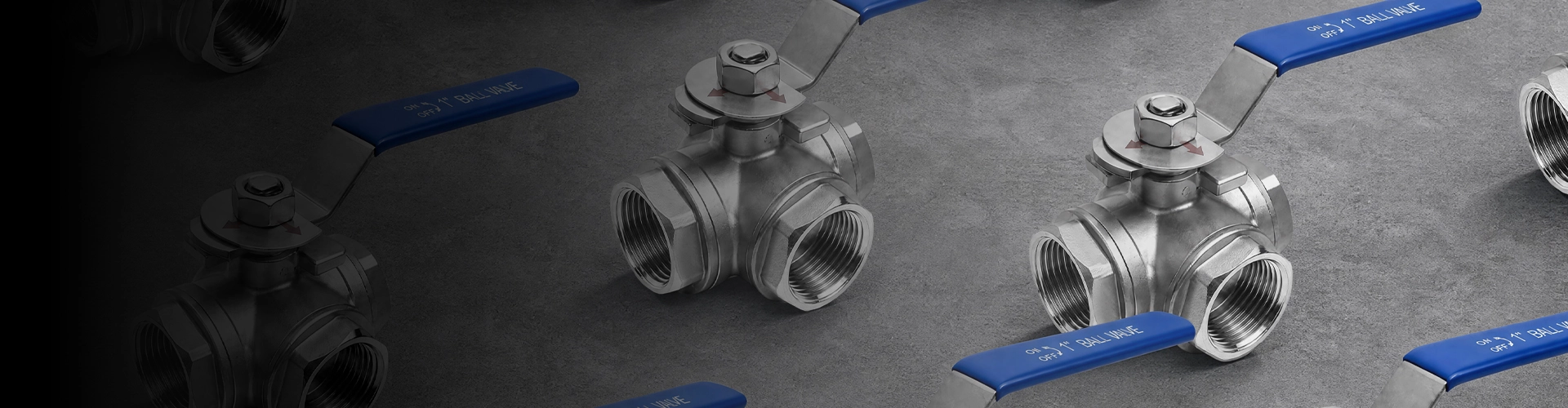
Three Way Ball Valves
China Professional Three Way Ball Valves Manufacturer
Shangtai Three Way Ball Valves are designed for industrial pipeline systems that require flow switching, diverting, or combining within a single valve body. With three ports and selectable L-port or T-port flow patterns, they can direct media between different pipeline paths while helping simplify piping arrangements.
These valves are suitable for water treatment, chemical processing, HVAC, food and beverage, compressed air, fuel transfer, and general industrial fluid handling. Shangtai supplies different connection types, materials, sealing options, and operating methods according to the required medium, pressure, temperature, and pipeline configuration. For other ball valve constructions, see our ball valve product range.
Select the Flow Pattern Before Ordering
The required flow path is one of the most important selection factors. Providing a simple pipeline drawing or flow diagram allows Shangtai to confirm whether an L-port or T-port configuration is appropriate and verify the required handle or actuator position.
L-Port and T-Port Flow Patterns
The internal ball configuration determines how the three ports are connected at different handle positions. L-port and T-port designs are not interchangeable because they provide different flow path combinations.
L-Port Three Way Configuration
An L-port arrangement is commonly used when the valve needs to switch flow between two of the available paths. Depending on the specific ball design, it can direct the medium from one inlet to one of two outlets, or switch between two flow directions.
T-Port Three Way Configuration
A T-port arrangement provides additional flow path combinations and can be used for applications involving diversion or combining of flow. The actual available paths depend on the internal ball geometry and handle position, so the required operating sequence should be confirmed before production.
Flow Diagram Recommended
For projects involving multiple flow paths, provide a pipeline schematic showing the inlet, outlets, required flow direction, and switching positions. This gives the engineering team a clear basis for confirming the port configuration and operating arrangement.
Flow Switching, Diverting and Combining
Unlike a standard two-port ball valve used primarily for on/off isolation, a three-way configuration allows the valve to manage flow between multiple pipeline paths. Depending on the port pattern, it can be used to switch between lines, divert a medium toward different equipment, or combine compatible streams.
This can reduce the number of individual valves required in certain piping arrangements and may simplify equipment layouts. The valve configuration should always be selected according to the actual process flow requirements rather than simply by pipe size.
Connection Options for Different Pipeline Systems
Shangtai can provide different end connection configurations according to the pipeline standard and installation requirements. Available options may include threaded, flanged, socket-weld, and butt-weld connections, depending on the valve design and specification.
Connection selection should consider nominal pipe size, pressure rating, installation method, surrounding equipment, and applicable project standards. When replacing an existing valve, providing the original connection specification or drawings can help confirm compatibility.
Materials and Sealing Selection
Body and internal material selection should be based on the working medium, pressure, temperature, and corrosion conditions. The ball, stem, seats, and sealing components should also be compatible with the service medium and operating environment.
Common sealing materials may include PTFE, reinforced PTFE, and other application-specific materials. The suitable sealing configuration depends on the actual temperature range, chemical compatibility, pressure conditions, and required service performance.
Manual and Automated Operation
Three-way configurations can be operated manually or integrated with an actuator when remote or automated flow switching is required. Manual handles are suitable for local operation, while pneumatic and electric actuators can be considered for automated process systems.
For actuated applications, the required control mode, operating sequence, actuator type, power supply or air supply, and fail-safe requirements should be confirmed before production. The actuator must also be correctly matched to the valve torque and operating conditions.
Automated Flow Path Switching
For automated systems, provide the required valve positions and switching sequence together with the control requirements. Shangtai can review the valve and actuator configuration to help match the operating arrangement with the process control system.
Product Applications
Three-port flow switching is useful in systems where one pipeline needs to connect with different process paths or equipment. Typical applications include water treatment systems, HVAC circulation lines, chemical processing, food and beverage equipment, compressed air systems, fuel transfer, fluid distribution, and general industrial utilities.
The actual suitability depends on the medium, pressure, temperature, flow rate, compatibility of materials, and required switching pattern. For applications requiring simple two-way isolation rather than flow path selection, a standard 2 Piece Ball Valve or 3 Piece Ball Valve may be more appropriate.
Manufacturing and Quality Inspection
Shangtai manages machining, assembly, inspection, pressure testing, and final preparation according to the specified valve configuration. For three-way products, particular attention should be given to the port arrangement, ball orientation, sealing performance, operating position, and connection dimensions.
Project-specific technical requirements can be reviewed before production, including materials, pressure ratings, connection standards, flow pattern, actuator requirements, and required documentation. This helps ensure that the supplied valve configuration corresponds with the intended pipeline layout.
How to Select the Right Three Way Ball Valves
Accurate selection starts with the required flow path rather than the valve size alone. Before requesting a quotation, prepare the following information where available:
- Valve size and nominal pipe diameter
- L-port or T-port requirement
- Required inlet and outlet flow paths
- Working medium and fluid characteristics
- Working pressure and pressure rating
- Operating temperature
- Body and sealing material requirements
- Threaded, flanged, socket-weld, or butt-weld connection
- Manual, pneumatic, or electric operation
- Actuator voltage, air supply, or control requirements
- Required quantity and project documentation
- Flow diagram or pipeline drawing, if available
If you are unsure whether an L-port or T-port configuration matches your pipeline, send your flow diagram and valve requirements to Shangtai. Our team can review the flow paths and technical parameters before quotation.
Frequently Asked Questions
What is the difference between L-port and T-port designs?
Shangtai Three Way Ball Valves are available with L-port and T-port configurations. An L-port design is generally used to switch flow between selected ports, while a T-port design provides additional flow path combinations for applications such as diverting or combining flow. The actual flow paths depend on the internal ball design and handle position.
How do I choose the correct flow pattern?
Provide the pipeline layout, required inlet and outlet paths, and switching sequence. A simple flow diagram can help confirm the appropriate port configuration and operating positions before production.
Can these valves be used for flow control?
They are mainly intended for on/off operation and flow path switching. They are generally not recommended for precise continuous throttling unless a specific control configuration has been designed for the application.
What connection types are available?
Depending on the configuration, options may include threaded, flanged, socket-weld, and butt-weld connections. The suitable connection depends on the pipeline standard, pressure rating, valve size, and installation requirements.
Can an actuator be fitted?
Yes. Manual handles, pneumatic actuators, and electric actuators can be considered according to the valve size and application. For automated operation, the control mode, power or air supply, switching sequence, and fail-safe requirements should be confirmed.
How should the body and sealing materials be selected?
Material selection depends on the working medium, pressure, temperature, and corrosion conditions. Sealing materials such as PTFE or reinforced PTFE may be considered according to the actual service environment and compatibility requirements.
What information is required for a quotation?
Please provide valve size, pressure rating, body material, sealing material, connection type, working medium, temperature, required flow pattern, operation method, and quantity. A flow diagram or pipeline drawing is recommended when multiple flow paths are involved.
Need a Three-Port Flow Switching Solution?
Share your pipeline drawing, flow direction, valve size, medium, pressure, temperature, connection type, and operating requirements. Shangtai can review the configuration and provide a suitable valve specification and quotation.
Send Inquiry- View as
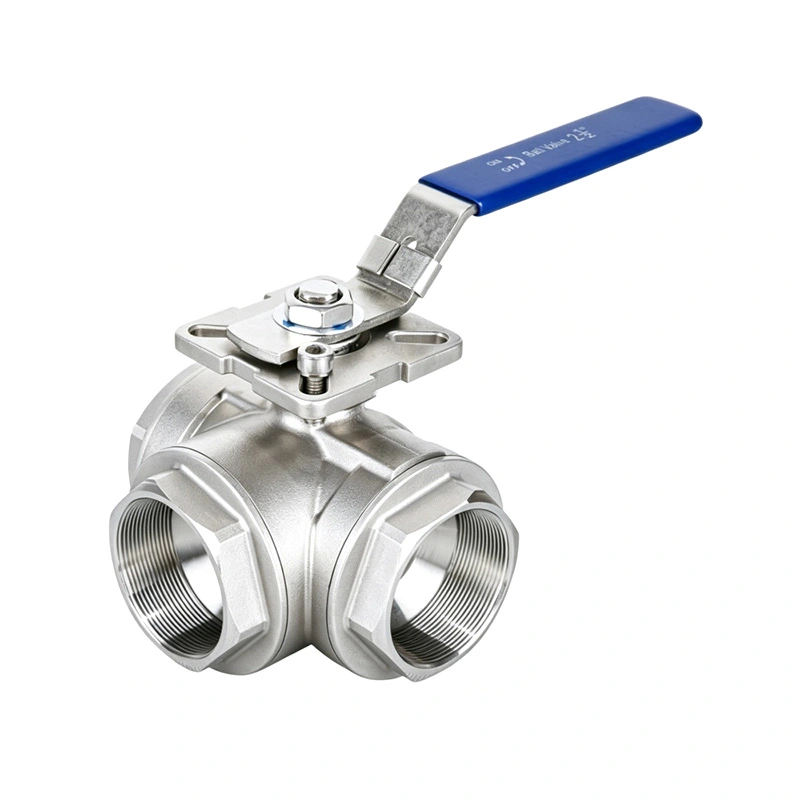
Three Way Ball Valve L Port
Shangtai Three Way Ball Valve L Port is made from 304/316 stainless steel for reliable directional flow control. Precision threads, strict QC, ISO9001 & CE certified production, and fast support from our Wenzhou factory.
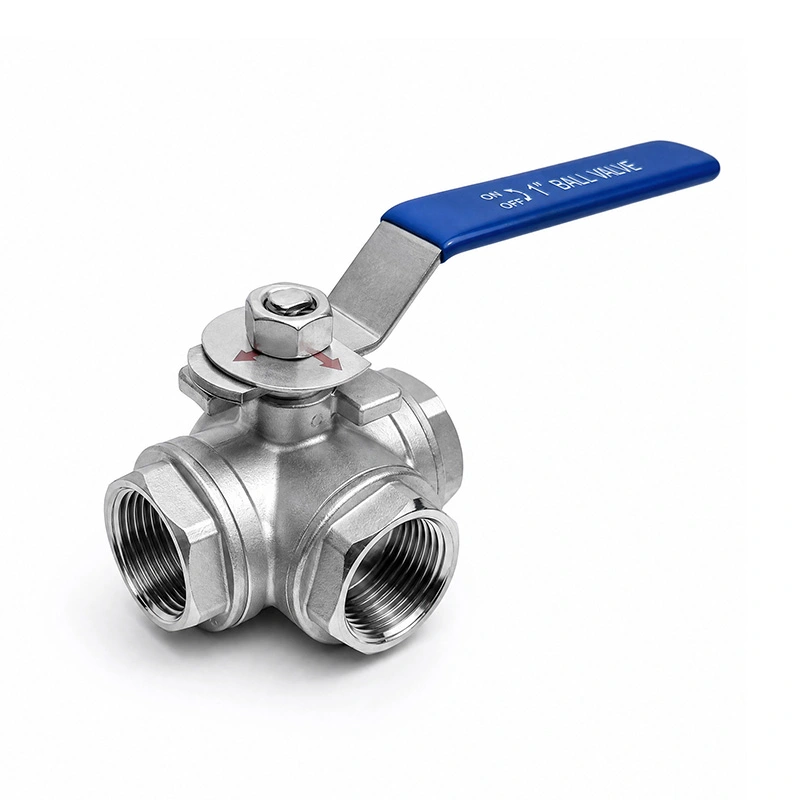
Three Way Ball Valve T Port
Shangtai Three Way Ball Valve T Port enables flow mixing, diverting and multi-direction distribution. Precision threads, strict QC, on-site material verification, mold development capability and fast support from our Wenzhou factory.
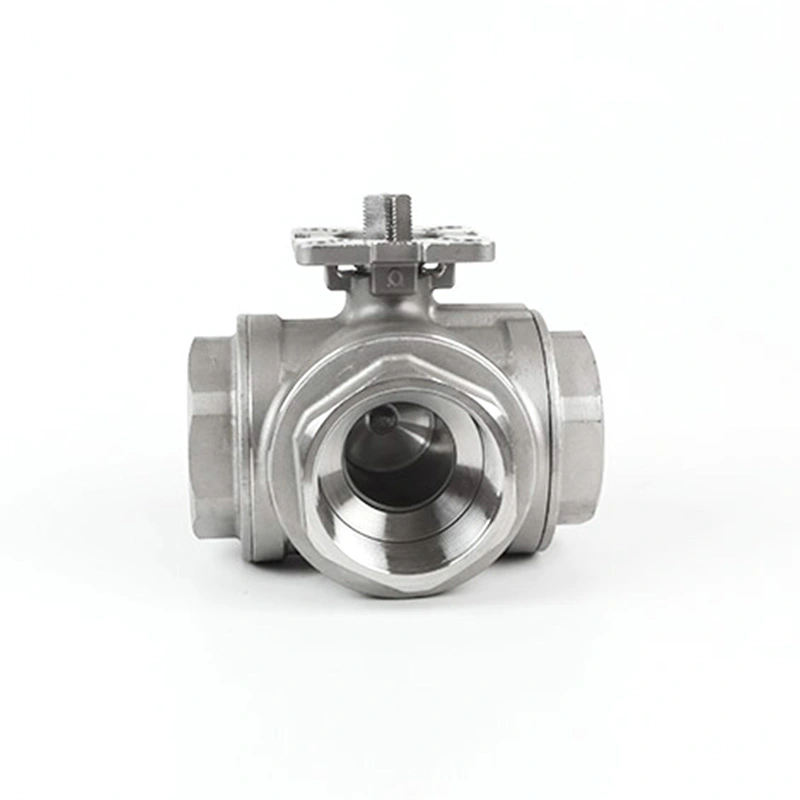
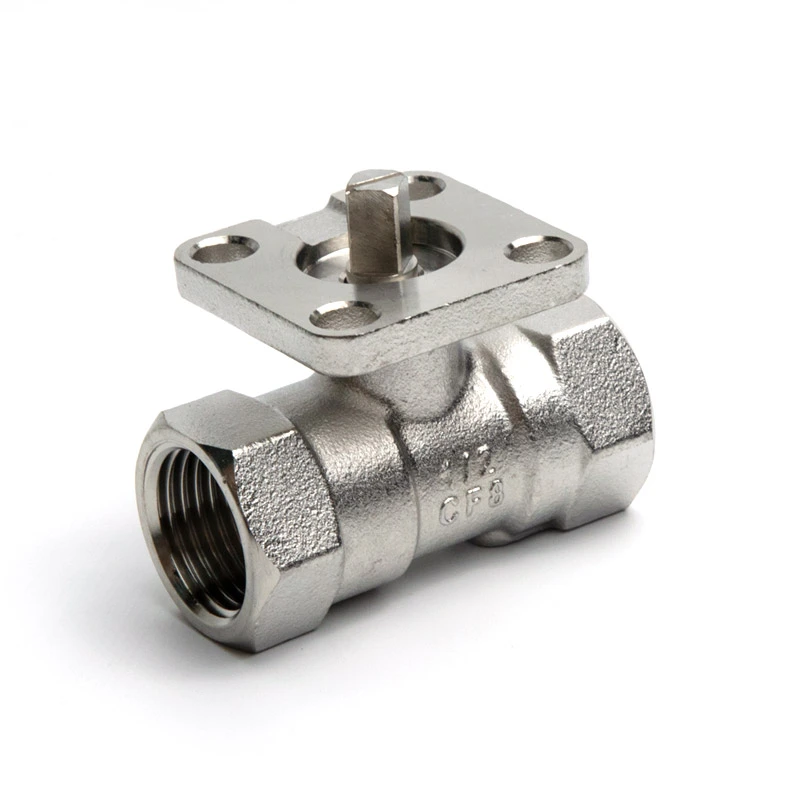
Three Way Ball Valve with ISO 5211 Direct Mounting Pad L Port
Three Way Ball Valve with ISO 5211 Direct Mounting Pad L Port from Shangtai provides reliable flow switching between two pipelines. As a Wenzhou source manufacturer, we offer precise threads, certified quality control, competitive factory pricing and fast technical support.
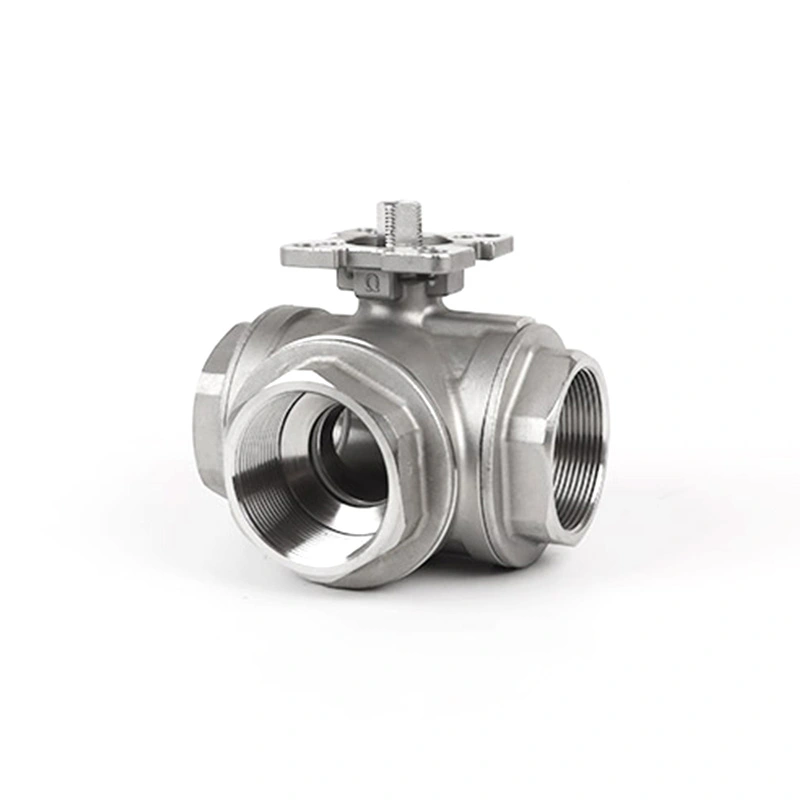
Three Way Ball Valve with ISO 5211 Direct Mounting Pad T Port
Shangtai Three Way Ball Valve with ISO 5211 Direct Mounting Pad T Port offers flexible flow mixing/diverting, precise threads, factory-direct pricing, ISO 9001/CE quality, and fast support from our Wenzhou valve factory.
Shangtai Valve is a professional Three Way Ball Valves manufacturer and supplier in China. Welcome to import quality products from our factory here.
News Recommendations