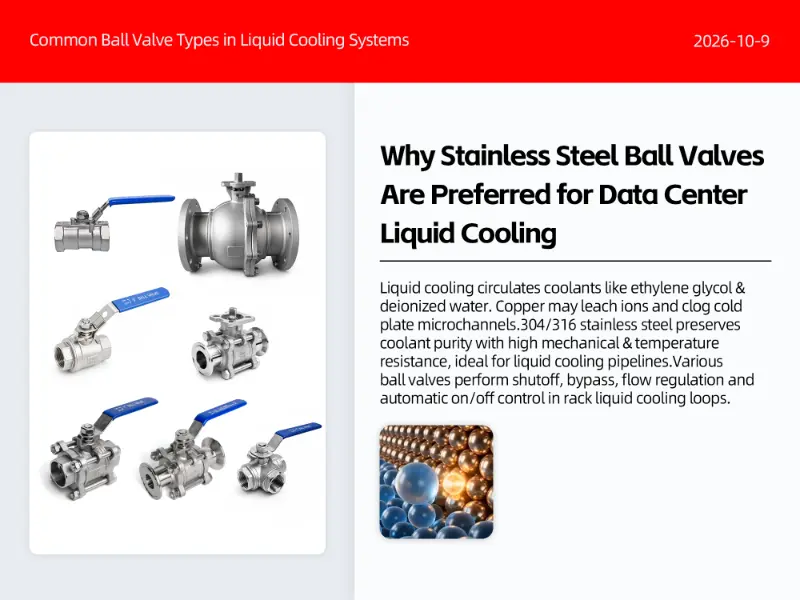
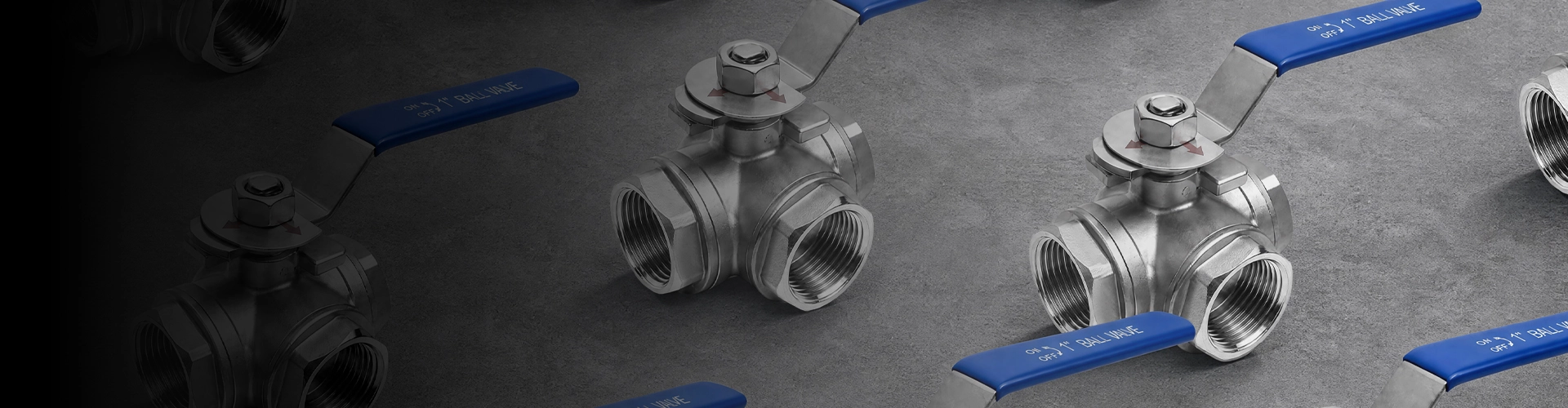
Three Way Ball Valves
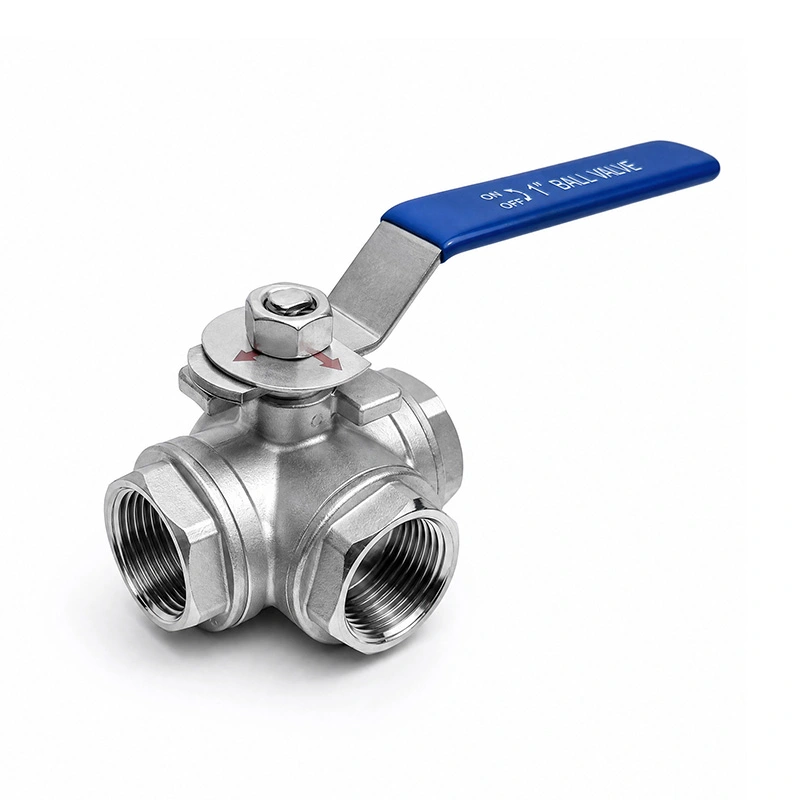
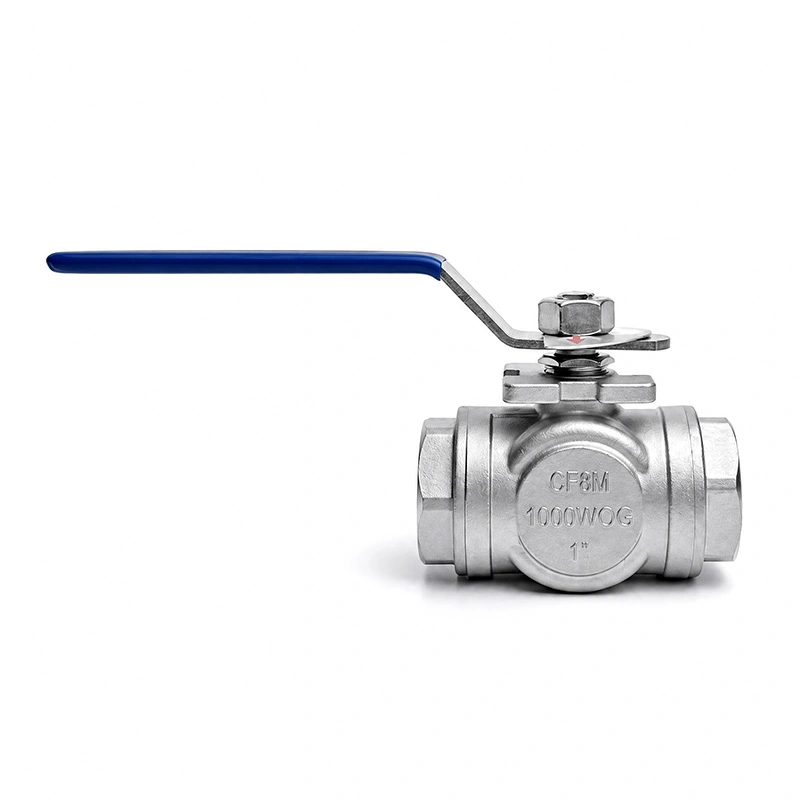
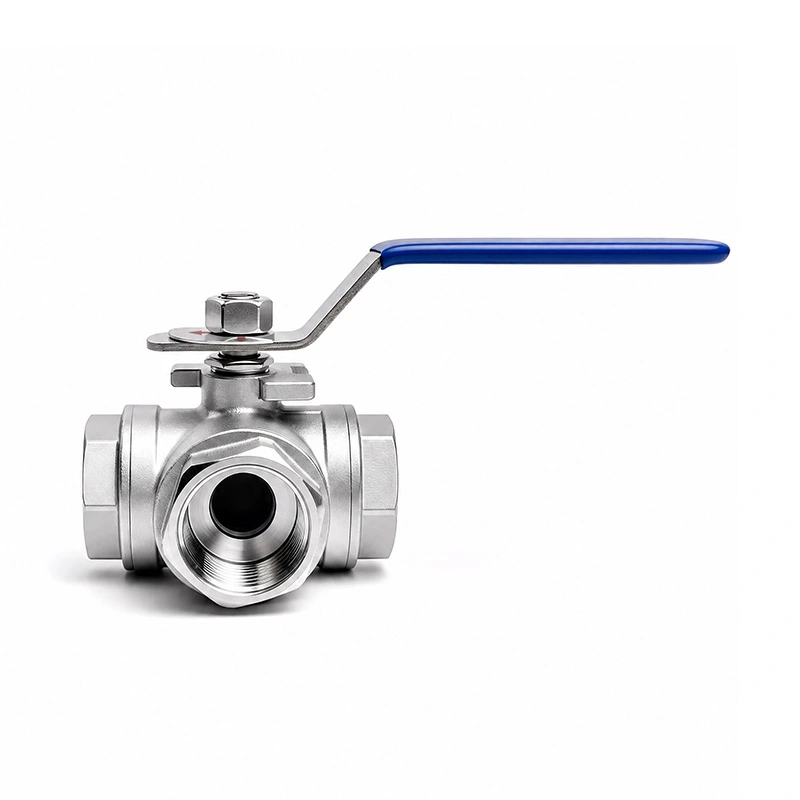
Three Way Ball Valve T Port
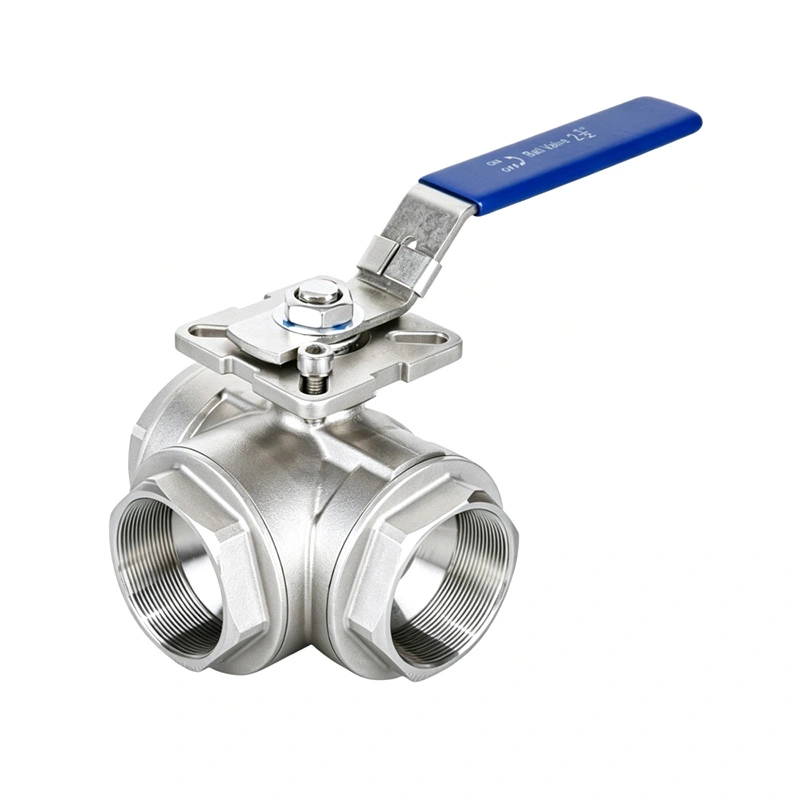
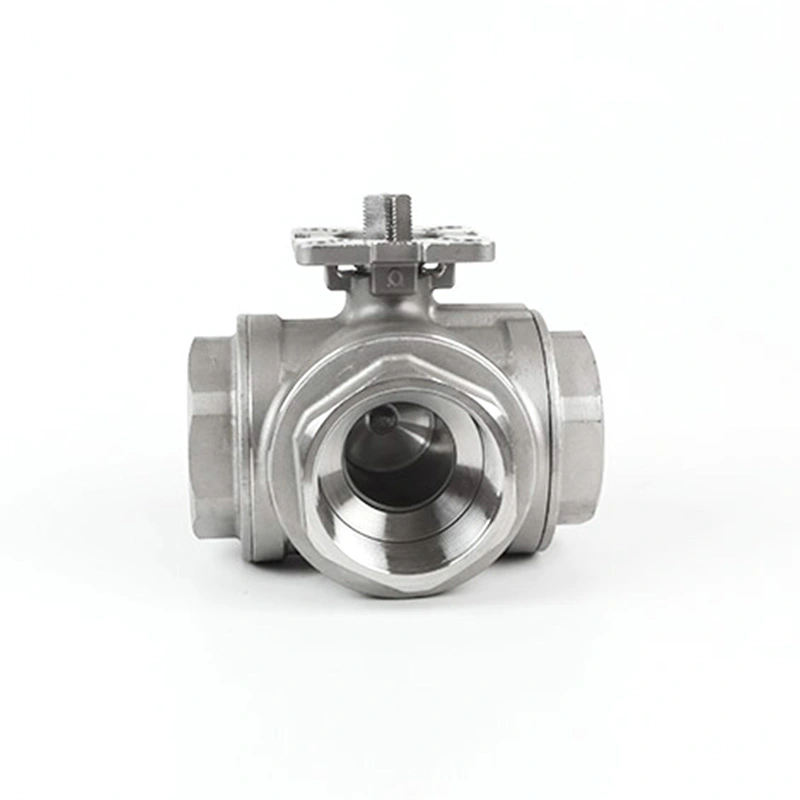
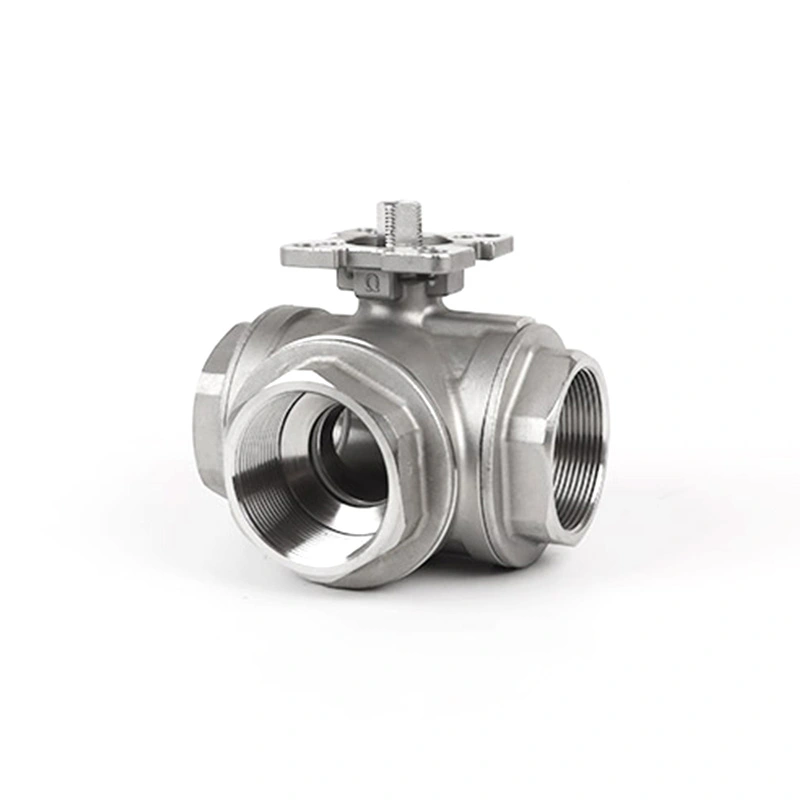
Shangtai Three Way Ball Valve T Port enables flow mixing, diverting and multi-direction distribution. Precision threads, strict QC, on-site material verification, mold development capability and fast support from our Wenzhou factory.
The Three Way Ball Valve T Port is designed for piping systems that require flexible flow control through one compact valve. Its T-shaped flow passage can connect multiple pipeline directions, making it suitable for mixing, diverting, bypassing, or distributing media.
Compared with using several two-way valves, a T-port three way ball valve helps simplify pipeline layout, reduce connection points, and improve operation efficiency in fluid control systems.
Main Dimensions
| Size | 1/2"- 4" |
| Pressure Class | CL150 |
| Thread Standard | NPT、BSP |
| Max Pressure | 285PSI |
| Design and manufacturing standards | ASME B16.34 |
| Testing and inspection | API598 |
| Pressure-Temperature Ratings | ASME B16.34 |
| Temperature Range | -25℃~150℃ |
| Body material | ASTM A351 CF8M(316) |
| Ball Material | ASTM A182 F316 |
| Stem Material | ASTM A182 F316 |
| Seat Material | RPTFE(PTFE+15%fv) |
| Options | Other materials are available upon request. |
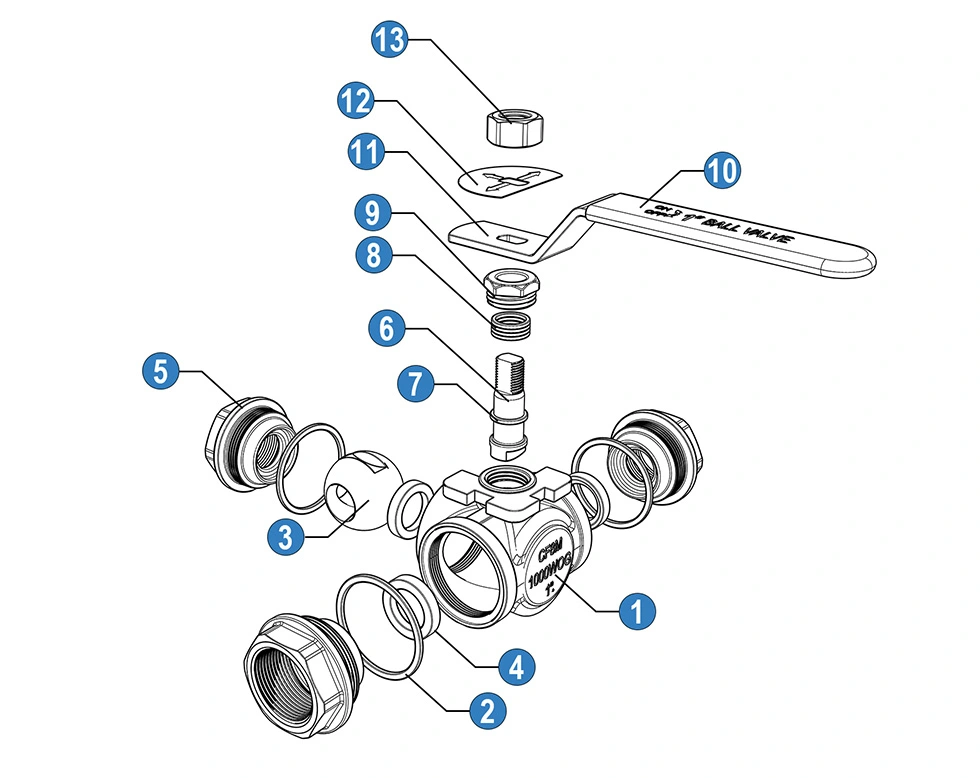
| No | Name | Material(*N/B) | ||
| 1 | BODY | WCB | CF8 | CF8M |
| 2 | Gasket | PTFE | ||
| 3 | Ball | 304 | 304 | 304 |
| 4 | Seat | PTFE/RPTFE/PPL | ||
| 5 | Bonnet | WCB | CF8 | CF8M |
| 6 | Stem | 304 | 304 | 304 |
| 7 | Stem Washer | PTFE/PTFE.25% GLASS FIBER | ||
| 8 | Packing | PTFE | ||
| 9 | Gland | 304 | ||
| 10 | Handle Sleeve | PVC | ||
| 11 | Handle | SS | ||
| 12 | Crown Washer | 304 | ||
| 13 | Nut | 304 | ||
* N: Thread ends according ANSI B 2.1 NPT
* B: Thread ends according BS21 BSP
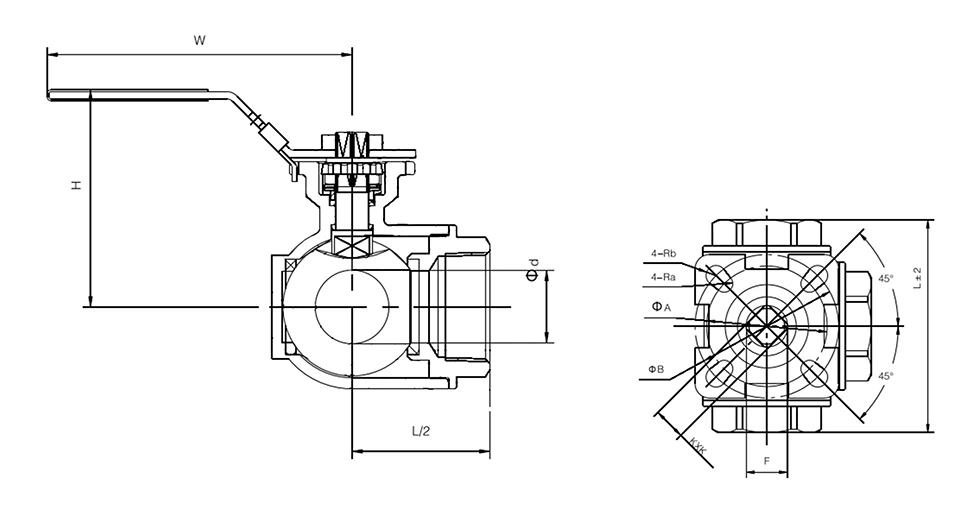
| SIZE | 1/4" | 3/8" | 1/2" | 3/4" | 1" | 1-1/4" | 1-1/2" | 2" |
| d | 10 | 10 | 10 | 15 | 18 | 25 | 32 | 40 |
| L | 72 | 72 | 72 | 83 | 91 | 117 | 136 | 146 |
| H | 62 | 62 | 62 | 68 | 77 | 92 | 105 | 118 |
| W | 100 | 100 | 120 | 120 | 140 | 150 | 180 | 180 |
| A | 36 | 36 | 36 | 36 | 42 | 42 | 50 | 50 |
| B | 42 | 42 | 42 | 42 | 50 | 50 | 70 | 70 |
| Ra | 3 | 3 | 3 | 3 | 3 | 3 | 3.5 | 3.5 |
| Rb | 3 | 3 | 3 | 3 | 3.5 | 3.5 | 4.5 | 4.5 |
| F | 12 | 12 | 12 | 12 | 12 | 14 | 18 | 18 |
| KXK | 9×9 | 9×9 | 9×9 | 9×9 | 9×9 | 11×11 | 14×14 | 14×14 |
| ISO5011 | F03 | F03-F04 | F03-F04 | F04-F05 | F04-F05 | F05-F07 | F05-F07 |
Why Choose Us
Source Valve Manufacturer
Shangtai is a professional valve factory located in Wenzhou, Zhejiang, China, only 10 minutes from the airport.
Certified Production System
Our manufacturing follows ISO 9001 quality management standards and CE certification requirements.
Fine Thread Processing
Precision-machined threads ensure smooth installation, stable connection, and reliable sealing performance.
Complete Quality Control
Standardized inspection is applied throughout material checking, machining, assembly, pressure testing, and packing.
On-Site Material Verification
Equipped with material testing devices, we support on-site material inspection for greater purchasing confidence.
Mold Development Capability
We can support mold development and customized production according to drawings, samples, or OEM requirements.
Fast After-Sales Response
Our service team provides timely support for product selection, order follow-up, and after-sales issues.
Applicable Industries
Water Treatment: Used in water distribution, filtration and process piping where flow needs to be diverted between connected lines.
Chemical Processing: Suitable for chemical transfer, dosing and process pipelines when the valve materials and seals are compatible with the working medium.
HVAC Systems: Applied in heating and cooling circulation systems for switching or diverting flow between different branches.
Pharmaceutical Processing: Suitable for process equipment and clean utility systems where the connection type, valve materials and internal configuration meet the applicable sanitary requirements.
Industrial Automation: Used on automated skids, manifolds and process equipment where several pipeline directions need to be controlled from a single three-way valve.
General Fluid Distribution: Applicable to fluid mixing, diversion and bypass arrangements, subject to the valve's pressure, temperature and material specifications.
FAQ
Q1: What is the main function of a T-port three-way ball valve?
A T-port configuration can connect different combinations of the three valve ports as the ball is rotated. It can be used for flow diversion, flow mixing, bypass arrangements or switching between pipeline branches, depending on the port orientation and required operating position.
Q2: What is the difference between T-port and L-port?
T-port and L-port configurations provide different flow paths. A T-port can connect three ports in certain ball positions, making it suitable for applications requiring more than one flow arrangement. An L-port generally connects two ports at a time and is commonly used for switching flow between two directions.
Q3: Can a T-port valve distribute flow to two outlets?
Yes, a T-port valve can allow flow from one inlet to two outlets in suitable configurations. However, the actual flow distribution is affected by pressure difference, downstream resistance, pipe size and system layout. It should not be assumed that the two outlets will receive equal flow.
Q4: What information is needed when selecting a three-way ball valve?
Provide the valve size, working medium, pressure, temperature, connection standard, body and seal materials, required flow pattern and operating method. For automated systems, actuator type and required operating torque should also be confirmed.
Q5: What is a Three Way Ball Valve T Port used for?
A Three Way Ball Valve T Port is used when a piping system requires multiple flow paths through three connected ports. The actual flow function depends on the internal port geometry, ball position and pipeline arrangement, so the required flow pattern should be confirmed before ordering.
Q6: Can the valve materials be verified before shipment?
Yes. Material verification and inspection can be arranged according to the product configuration and order requirements. Material documentation or inspection records can also be provided where specified.
Send Inquiry
Contact Info
-
Address
JINHAI 3RD ROAD, YONGXING SUB-DISTRICT, LONGWAN DISTRICT, WENZHOU CITY, ZHEJIANG PROVINCE, CHINA
-
Tel
-
Email
Contact our team with product specifications, working conditions, connection standards, pressure requirements, or drawings. We provide valve recommendations, customization options, pricing, and technical support according to your project needs.
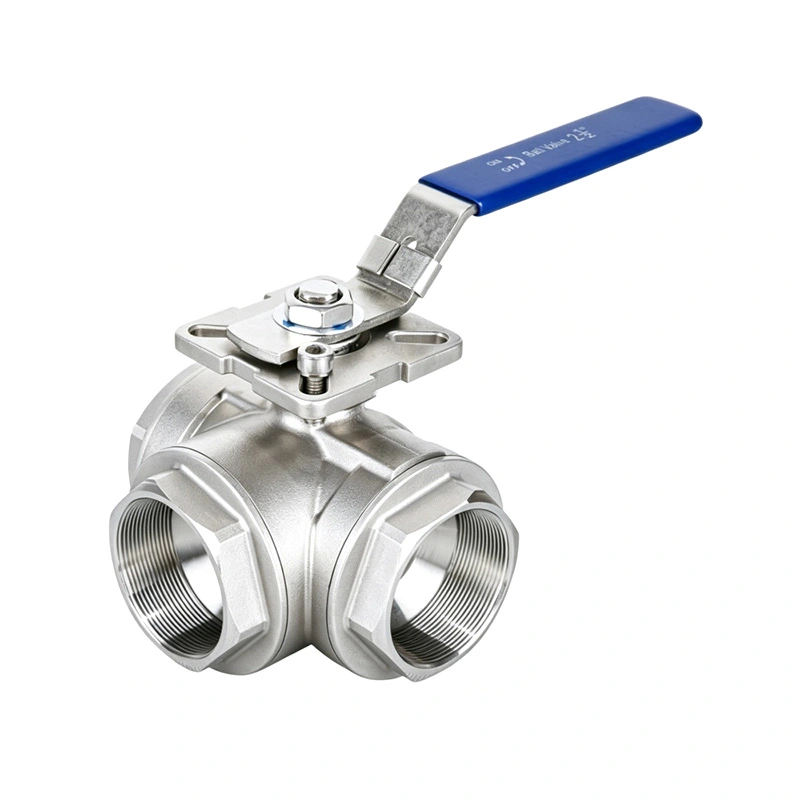
News Recommendations