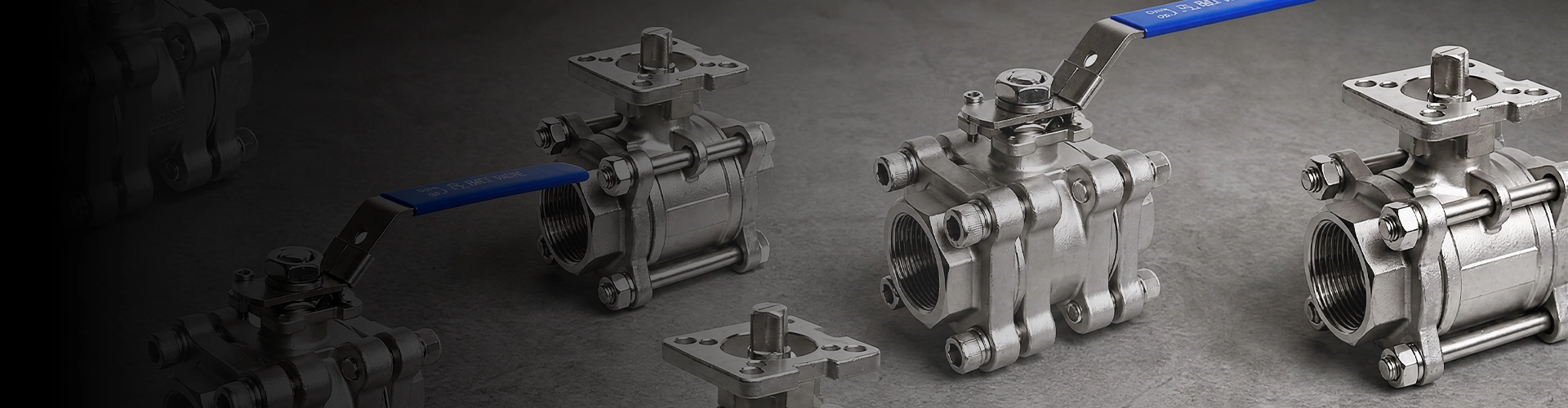
3PC Ball Valves
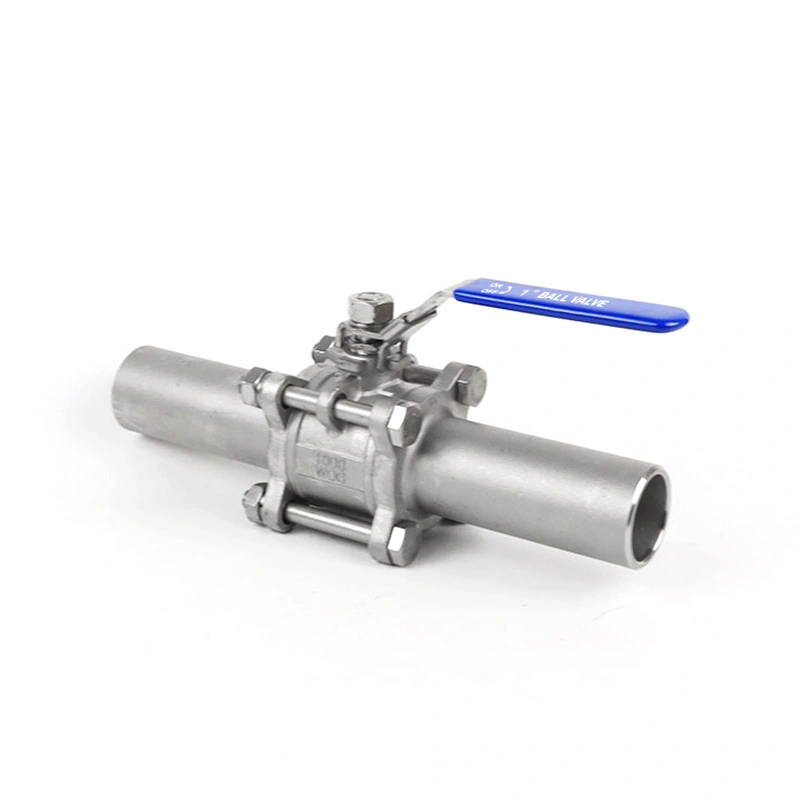
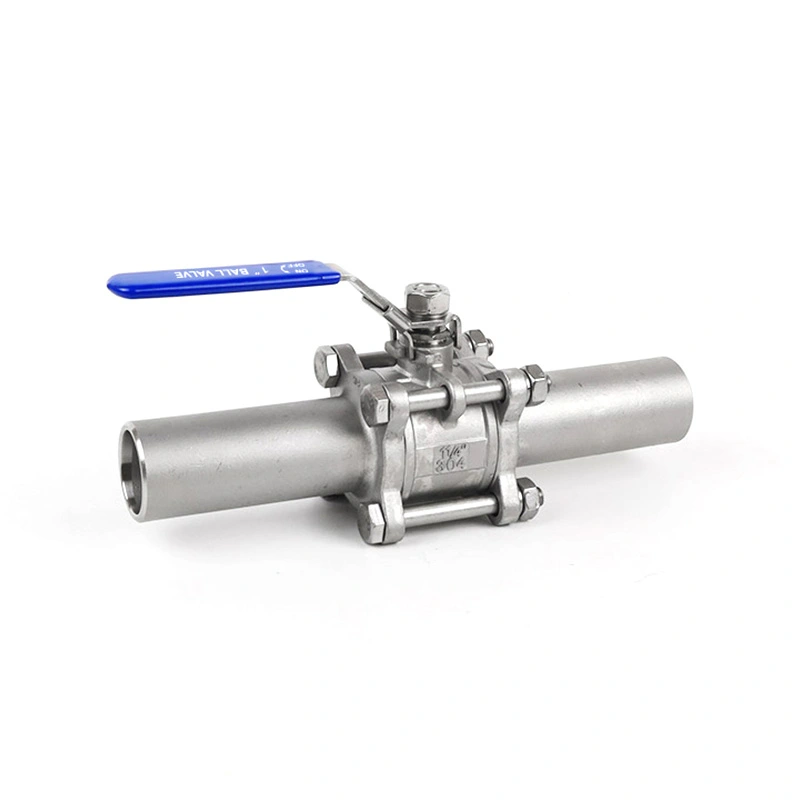
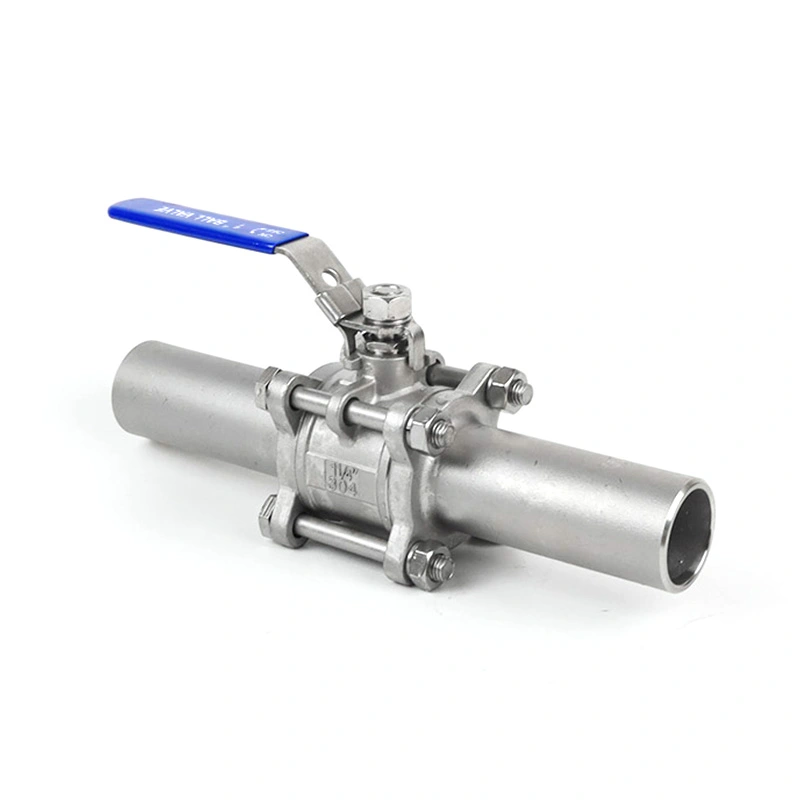
3PC Ball Valve Weld Extended
Shangtai 3PC Ball Valve Weld Extended is a stainless steel ball valve designed for welded pipeline systems. Its three-piece construction combines with extended weld ends to accommodate piping layouts such as insulated and buried lines. The valve is intended for on/off control of compatible fluids in industrial piping where a welded connection is specified.
The 3PC Ball Valve Weld Extended uses extended butt-weld ends to provide additional welding length between the valve body and pipeline. The extended ends are useful for insulated pipelines, buried installations and piping layouts where extra welding distance is required. The three-piece body also provides access to internal components for inspection and replacement after the pipeline is isolated.
Main Dimensions
| Size | 1/4"- 6" |
| Pressure Class | CL150 |
| Butt-weld ends | ASME B16.25 |
| Max Pressure | 285PSI |
| Design and manufacturing standards | ASME B16.34 |
| Testing and inspection | API598 |
| Pressure-Temperature Ratings | ASME B16.34 |
| Temperature Range | -25℃~150℃ |
| Body material | ASTM A351 CF8M(316) |
| Ball Material | ASTM A182 F316 |
| Stem Material | ASTM A182 F316 |
| Seat Material | RPTFE(PTFE+15%fv) |
| Options | Other materials are available upon request. |
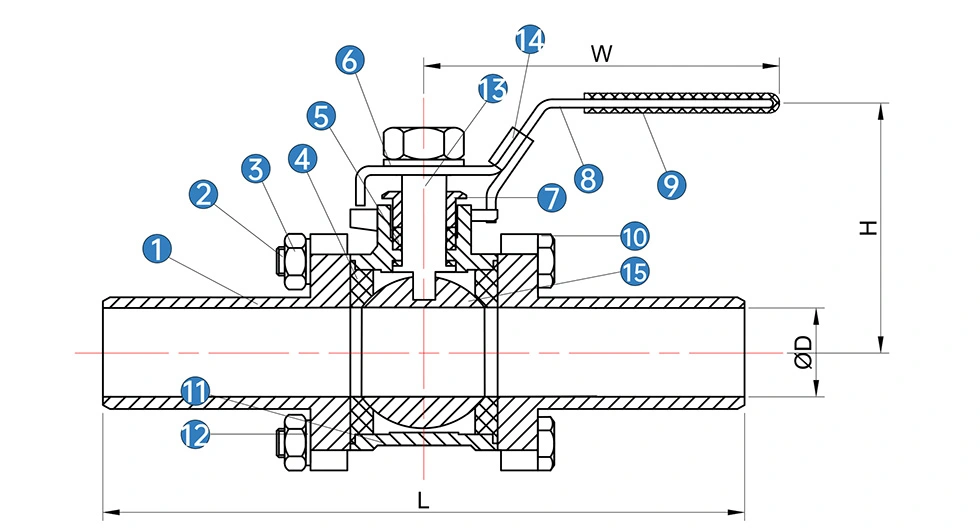
| No | Name | Material(*N/B) | |
| 1 | Cap | SS 316 | SS 304 |
| 2 | Bolt | SS 304 | SS 304 |
| 3 | Nut | SS 304 | SS 304 |
| 4 | Ball Seat | PTFE | PTFE |
| 5 | Stem packing | PTFE | PTFE |
| 6 | Spring Washer | SS 304 | SS 304 |
| 7 | Gland | SS 316 | SS 304 |
| 8 | Handle | SS | SS |
| 9 | Handle Sleeve | PVC | PVC |
| 10 | Bolt | SS 304 | SS 304 |
| 11 | Body | SS 316 | SS 304 |
| 12 | Spring Washer | SS 304 | SS 304 |
| 13 | Stem | SS316 | SS 304 |
| 14 | Handle Latch | SS304 | SS 304 |
| 15 | Ball | SS316 | SS 304 |
* N: Thread ends according ANSI B 2.1 NPT
* B: Thread ends according BS21 BSP
| SIZE | D | L | H | W |
| 1/2" | 15 | 150 | 70 | 120 |
| 3/4" | 20 | 156 | 80 | 120 |
| 1" | 25 | 186 | 86 | 140 |
| 1-1/4" | 32 | 198 | 100 | 150 |
| 1-1/2" | 38 | 232 | 118 | 180 |
| 2" | 50 | 244 | 139 | 180 |
| 2-1/2" | 65 | 290 | 157 | 240 |
| 3" | 80 | 306 | 170 | 240 |
| 4" | 100 | 325 | 185 | 280 |
Product Features
1. Extended Butt-Weld Ends
The extended weld ends provide additional space for pipeline welding and help keep welding work away from the main valve body. This configuration is useful for insulated or buried pipelines where the valve needs to be positioned outside the insulation or at an accessible location.
2. Three-Piece Construction
The split body allows the valve to be opened for inspection and maintenance. Seats, seals and other internal components can be accessed when replacement is required, reducing the need to replace the complete valve assembly.
3. 316 Stainless Steel Materials
The 3PC Ball Valve Weld Extended uses ASTM A351 CF8M (316) for the body and ASTM A182 F316 for the ball and stem. The standard seat is RPTFE (PTFE+15%fv). Other material combinations can be supplied according to the required service conditions.
4. Butt-Weld Connection
The weld ends follow ASME B16.25 requirements. A butt-welded connection provides a permanent joint between the valve and pipeline, with the welding procedure and pipe preparation determined by the applicable piping specification.
Welding and Installation
Before welding, check the pipe size, weld-end dimensions, bevel condition and alignment. The pipeline should be properly supported to prevent excessive load on the valve during installation. Welding procedures should also follow the applicable project specification.
The extended ends provide additional distance between the welding area and valve internals. Appropriate welding and heat-control procedures should still be followed to protect the seat, seals and other heat-sensitive components.
Materials and Operating Conditions
The valve is specified for a temperature range of -25℃ to 150℃ and a maximum pressure of 285PSI under the listed conditions. Actual operating limits should be confirmed according to valve size, medium, temperature and the applicable pressure-temperature rating.
The stainless steel body, F316 ball and F316 stem are intended for compatible industrial media. Seat and sealing material selection should be checked against the actual fluid, temperature and pressure before ordering.
Quality Inspection
Material Inspection
Material identification and related inspection records can be provided according to order requirements. Material test reports are available for applicable valve configurations.
Dimensional Inspection
Valve dimensions and weld-end features are checked against the specified product drawings and requirements. Inspection can include weld-end length, dimensions and general assembly condition.
Pressure and Sealing Tests
Valve testing and inspection follow API 598 requirements. Pressure and sealing tests are performed to check the valve body and seat sealing performance before shipment.
Finished Valve Inspection
Final inspection covers valve appearance, assembly, weld-end protection and operating condition. Required product documents can be prepared according to the order.
Applications
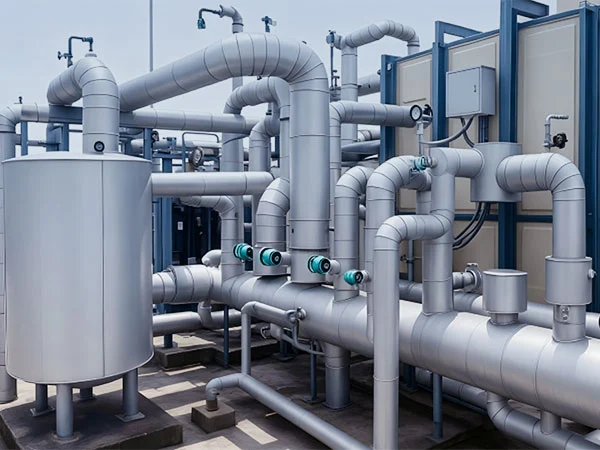
The 3PC Ball Valve Weld Extended is suitable for industrial piping where a welded connection and additional welding distance are required. Typical applications include petrochemical processing, oil and gas systems, thermal energy, water treatment and general industrial fluid control.
The extended-end configuration is particularly useful when pipeline insulation, underground installation or site layout limits the available space around the valve body. Application suitability should be confirmed based on the medium, pressure, temperature and pipeline specification.
Packaging
The valves are packed for export transportation using corrugated cartons and plywood cases. The weld ends are protected during packing to reduce the risk of damage to the bevel and connection surfaces during handling and shipment.
FAQ
1. What is the purpose of the extended weld ends on a 3PC Ball Valve Weld Extended?
The extended weld ends provide additional welding distance between the valve body and pipeline. They are useful for insulated pipelines, buried installations and other layouts where the welding area needs to be positioned farther from the valve body.
2. What material is used for the valve?
The standard body material is ASTM A351 CF8M (316), with ASTM A182 F316 used for the ball and stem. The seat is RPTFE (PTFE+15%fv). Other materials are available upon request.
3. What standard applies to the butt-weld ends?
The butt-weld ends are specified according to ASME B16.25. The final welding procedure should follow the applicable pipeline or project specification.
4. Can the valve be maintained after installation?
Yes. The three-piece body provides access to internal components for inspection and replacement. The pipeline must be isolated and depressurized before valve maintenance.
5. What are the pressure and temperature limits?
The listed maximum pressure is 285PSI, and the temperature range is -25℃ to 150℃. The actual allowable operating conditions depend on valve size, medium and the applicable pressure-temperature rating.
6. What documents can be provided?
Material test reports and applicable inspection or product documentation can be provided according to the valve configuration and order requirements.
Send Inquiry
Contact Info
-
Address
JINHAI 3RD ROAD, YONGXING SUB-DISTRICT, LONGWAN DISTRICT, WENZHOU CITY, ZHEJIANG PROVINCE, CHINA
-
Tel
-
Email
Contact our team with product specifications, working conditions, connection standards, pressure requirements, or drawings. We provide valve recommendations, customization options, pricing, and technical support according to your project needs.
Related Products
News Recommendations