
Sanitary Ball Valve: What 3-A and ASME BPE Actually Require (And Where They Fail)
“Sanitary” describes how a valve is built, not where it should go. A ball valve with Tri-Clamp ends, a polished bore and FDA-grade seals is a genuine sanitary component — and still the wrong valve for a filler header. This guide covers what the standards require, where a ball valve earns its place, and the five specifications that fail an audit.
A sanitary ball valve is the correct choice for CIP supply/return, high-viscosity product, and automated skids. It is the wrong choice as a sterile barrier or the last valve before a filler. The cavity never disappears.
Key Takeaways
| Requirement | What Matters |
|---|---|
| Surface finish | 3-A: Ra ≤ 0.8 µm. ASME BPE SF1/SF4: ≤ 0.38 µm. Demand a profilometer report with measurement locations. |
| CIP rating | Ball valves rate only “fair” — the cavity traps product. Full encapsulation reduces the exposed elastomer gap; it does not eliminate the cavity. |
| Connections | Tri-Clamp for changeover lines. Butt-weld for permanent headers. Threads are prohibited in product contact. |
| Material | 316L for welded chloride duty. Cast CF8M is 316, not 316L — this decides whether the weld pits in year three. |
1. What “Sanitary” Actually Requires
Finish. 3-A requires Ra ≤ 0.8 µm on wetted surfaces, verified by profilometer — not by eye. ASME BPE tightens this to SF1/SF4 ≤ 0.38 µm, with SF6 ≤ 0.25 µm for clean steam and WFI. An unmeasured polish is not a specification.
Material. 3-A accepts 304 or 316L. BPE accepts 316L only. The difference is carbon: 316L holds it at 0.03% or below, preventing chromium carbide precipitation in the weld heat-affected zone. A cast CF8M body is 316, not 316L.
Connection. Threads are prohibited in product contact. A spiral crevice cannot be cleaned by flow. Accepted joints are Tri-Clamp (ISO 2852 / DIN 32676) and butt-weld (EN 10357 / DIN 11850).
Seals. Every elastomer touching product needs a documented status: FDA 21 CFR 177.1550 for PTFE, 177.2600 for rubber, EU 10/2011 in Europe.
- Ask for the MTR to EN 10204 3.1 with heat number matched to the casting.
- Ask for a profilometer report stating which surfaces were measured.
- Ask for a written food-contact declaration naming the exact compound.
2. The Cavity Problem (Why Ball Valves Rate Only “Fair” for CIP)
A ball valve closes by rotating a sphere inside a body cavity. Shut, the upstream cavity fills with product. Open, that volume sits outside the flow path and receives no cleaning flow. This is why hygienic-design literature rates ball valves only “fair” for CIP, and diaphragm or mixproof valves “excellent.”
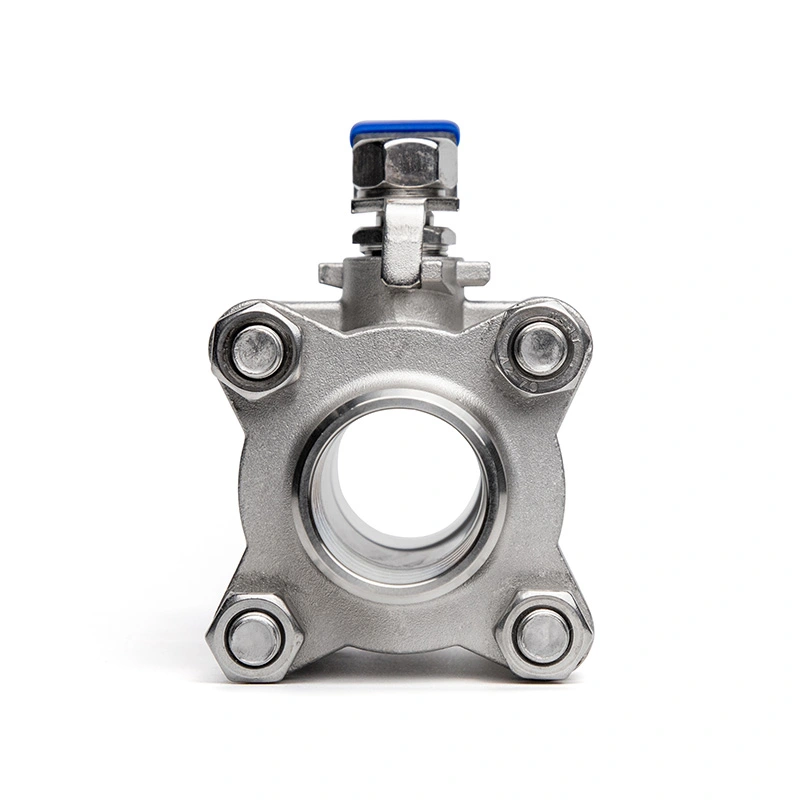
What full encapsulation does: Shangtai’s 3PC fully encapsulated Tri-Clamp sanitary ball valve wraps the seat and body seal in a continuous enclosure. The elastomer has no exposed edge, and the space behind the seat is filled rather than open. It reduces the problem substantially.
What it does not do: It does not make the valve drainable. The bore still holds liquid. The cavity still exists in principle.
Write This Boundary Into Your Specification
- CIP supply / return
- High-viscosity / particulate product
- Multi-product lines (3PC body)
- Automated skids (ISO 5211 pad)
- Last valve before a filler
- Sterile barrier
- Where mixproof is the design intent
EHEDG’s dead-leg screen is a useful filter, but a cavity is a volume problem, not a length problem.
3. Where a Sanitary Ball Valve Earns Its Place
CIP supply and return. Caustic at 1.5–2.0% and 70–80 °C, acid at 60–70 °C, rinse water. Not in product contact for most of the cycle, but it must not leak across and must survive the chemistry. Full bore matters: the loop runs at 1.5–3 m/s, and a reduced port throttles it.
High-viscosity and particulate product. Jam, chocolate, syrup, fruit preparation. A butterfly disc sits in the flow and builds up. A full-bore ball presents an unobstructed cylinder. Here it is the correct choice rather than a compromise — and the same body gives bubble-tight quarter-turn shutoff at a pump, where a diaphragm valve is less reliable against reverse pressure.
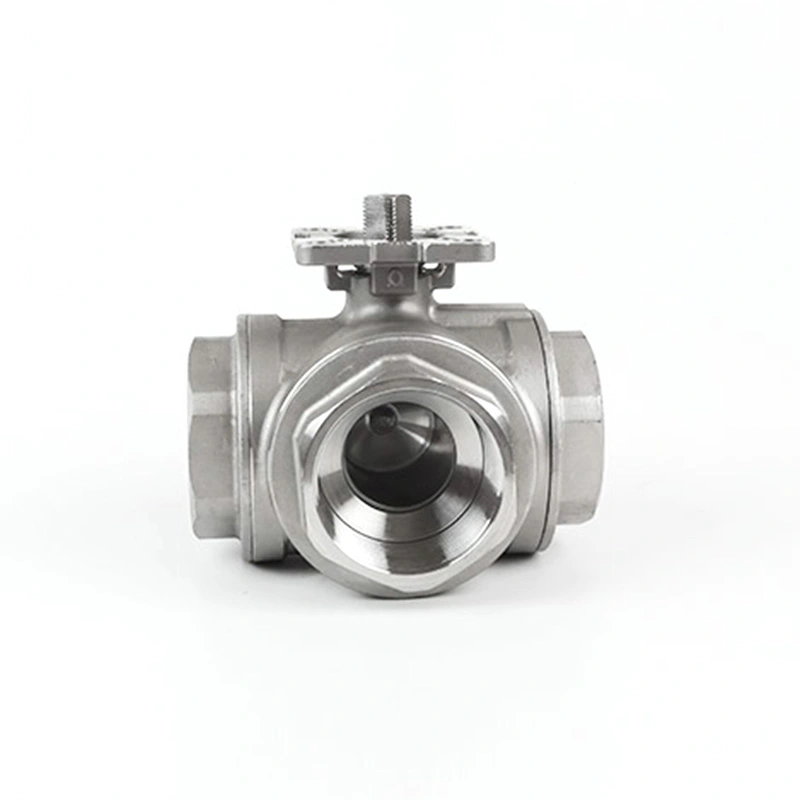
Multi-product lines. The three-piece body is the argument, not the seal. 3-A requires inspectable product-contact surfaces, and a valve that opens into three parts in two minutes satisfies that where a welded body cannot. Shangtai’s butt-welded version keeps the weld in the line and the maintenance out of it.
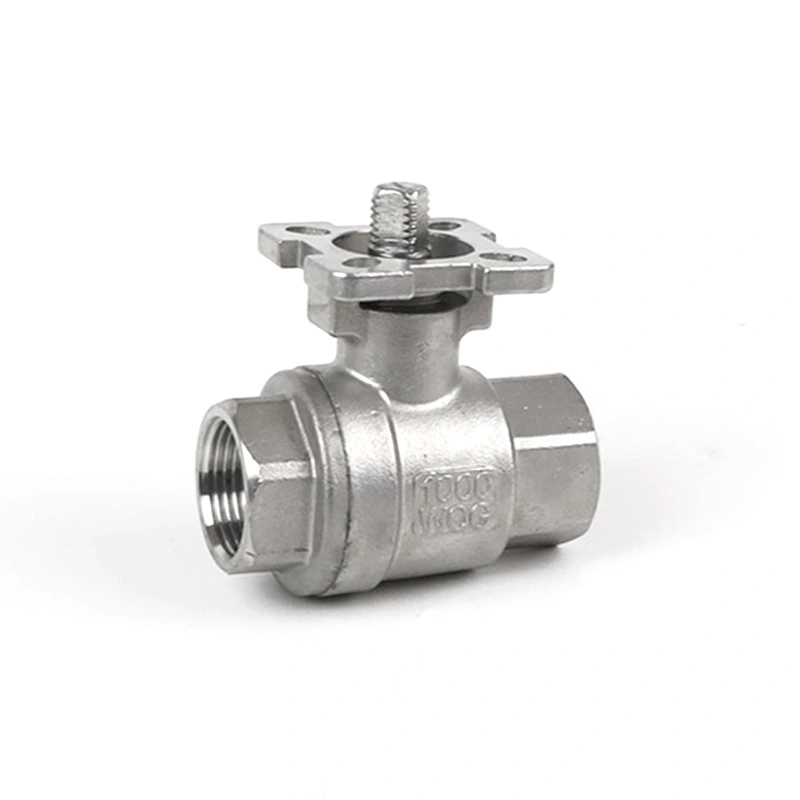
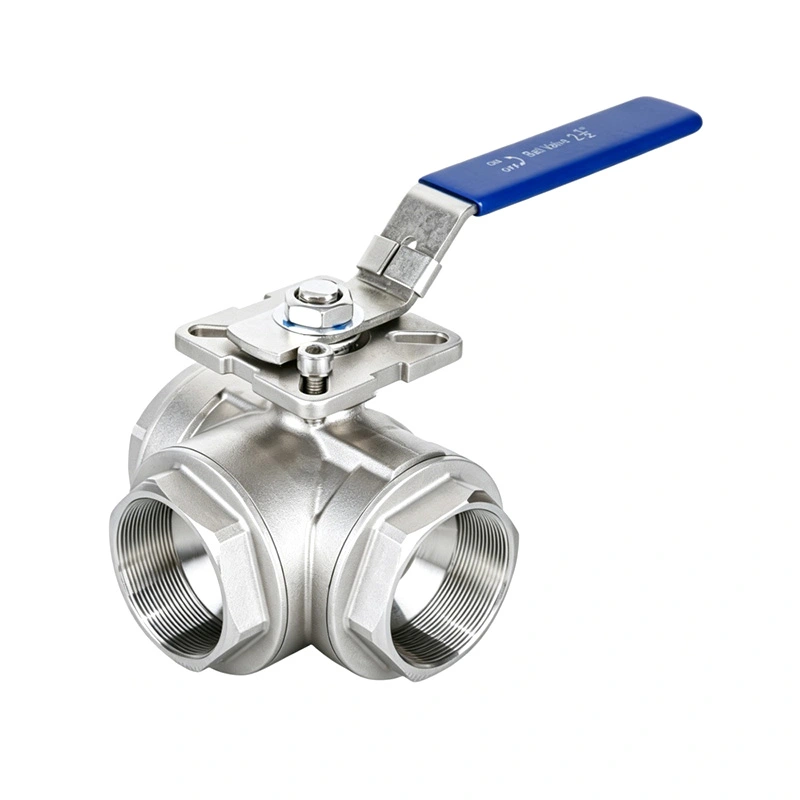
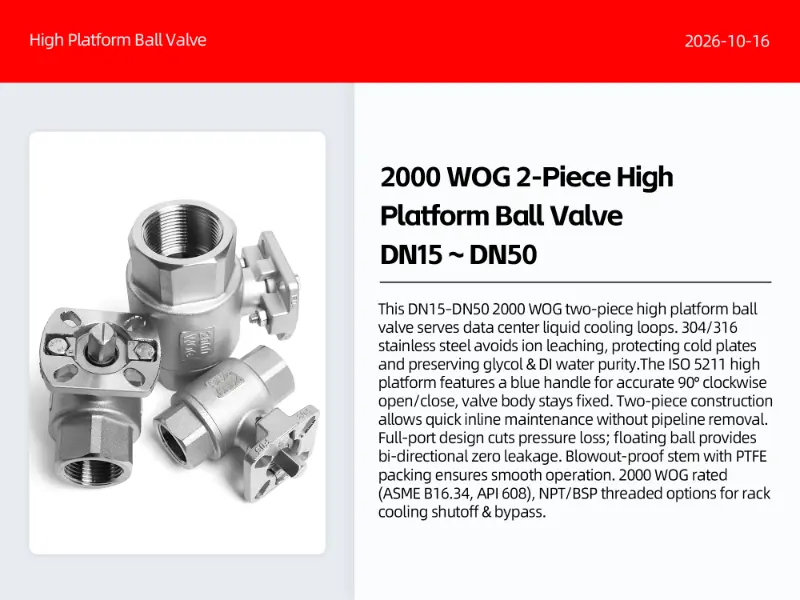
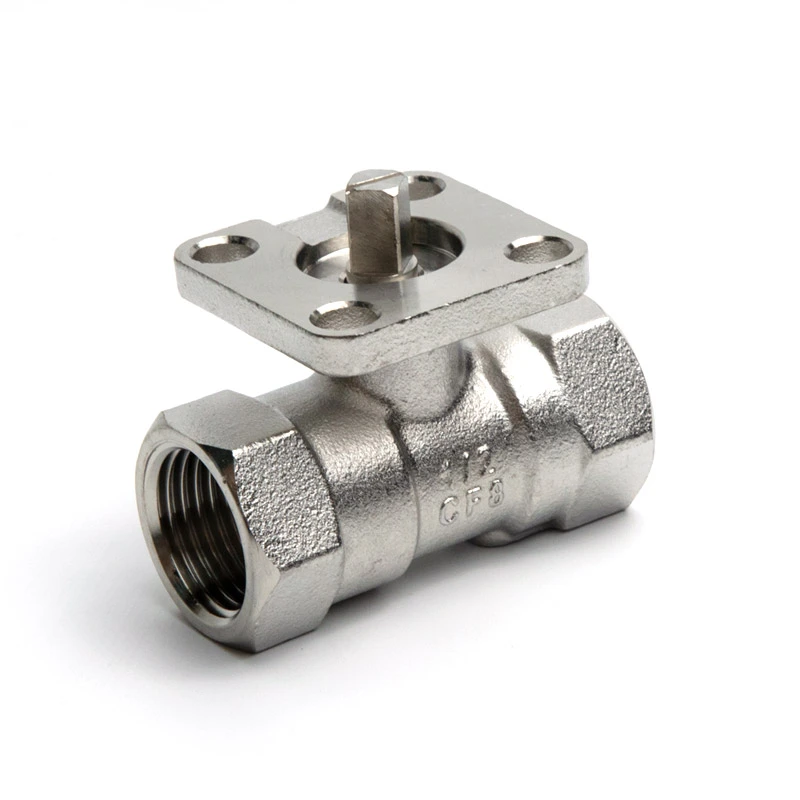
Automated skids. The ISO 5211 pad is the difference between a bolt-on and a bracket. The Tri-Clamp version with an ISO 5211 pad is the same body with a standardised interface.
Utilities. Steam, cooling water, compressed air and CIP make-up are not product contact. A sanitary valve here costs two to three times as much and buys nothing.
4. Tri-Clamp vs. Butt-Weld: Which Connection When
| Tri-Clamp (ISO 2852 / DIN 32676) | Butt-Weld (EN 10357 / DIN 11850) | |
|---|---|---|
| Joint | Clamp and gasket | Fused metal, no gasket |
| Strip-down | Tool-free, minutes | Cut out, or open the 3PC body |
| Weak point | The gasket — an elastomer in the flow path | The weld — heat-affected zone, needs passivation |
| Best for | Changeover lines, sampling points, reconfigured skids | Permanent headers, SIP service, high temperature |
| Audit view | Easy to inspect and prove clean | No crevice at all, harder to inspect internally |
Clamp where the line comes apart, weld where it does not. The usual mistake is specifying weld ends everywhere in the name of hygiene, then cutting a valve out of a hard-piped header because a seat failed. A three-piece body exists to avoid exactly that.
Shangtai’s butt-weld ends are machined to Ra ≈ 0.15 µm inside and out — finer than 3-A asks and finer than BPE SF1. This matters at the joint, where a valve-to-tube mismatch creates a ledge. It is not a claim about the whole flow path; ask which surfaces were measured.
5. Five Specifications That Fail an Audit
- A finish figure with no measurement location. “Ra 0.4” means nothing if it was taken on the weld end, not the bore behind the seat.
- 316 in place of 316L. On a welded chloride line, the difference surfaces as intergranular corrosion — invisible until the weld is cut.
- A filled PTFE seat with no food-contact declaration. Compliance depends on the filler and grade. The declaration must name the compound.
- SIP cycles assumed inside the seat rating. Reinforced PTFE tops out near 150 °C. Steam at 121 °C is inside. 134 °C sterilisation is not.
- Threaded or flanged joints in product contact. 3-A prohibits the first. The second leaves a crevice no CIP flow reaches.
6. FAQ
Is a sanitary ball valve the same as a food-grade one?
Not quite. “Food-grade” means FDA-compliant wetted materials. “Sanitary” adds hygienic design — measured finish, no crevices, cleanable and inspectable joints — defined by 3-A in the US and EHEDG in Europe.
Can a ball valve be cleaned in place?
With limits. Full encapsulation removes the exposed elastomer gap, and a full bore lets cleaning flow pass. The cavity volume and the liquid in the bore remain. Fine for CIP circuits and forward-flow lines, not for a sterile barrier.
316L or 316?
Clamped, un-welded, non-chloride duty: 316 (CF8M) works. Welded, chloride-bearing or ASME BPE scope: specify 316L and request the MTR.
7. Request for Quotation: What to Include
To receive a seat recommendation and fast quotation, provide these details in your RFQ:
- Valve type and size (DN or inch, and the tube OD standard)
- End connection (Tri-Clamp ISO 2852 / DIN 32676, butt-weld EN 10357, or other)
- Product-contact surface finish required (Ra value and the surfaces it applies to)
- Body material (304 / 316 / 316L) and whether an MTR to EN 10204 3.1 is required
- Product medium, concentration and particle content
- CIP and SIP cycle (chemical, concentration, temperature and duration)
- Maximum working pressure and temperature
- Seat and gasket material, and the food-contact declaration required
- Actuation (manual, pneumatic, electric) and whether an ISO 5211 pad is required
- Quantity, and any certification or documentation package required
Need a Seat Recommendation or Custom Configuration?
Contact UPTAI’s technical sales team directly. We support standard stock orders and OEM/ODM project customization.
Request a Quote →Professional Industrial Valve Manufacturer